
How Can Organizations Build a Culture of Continuous Learning?
Continuous learning is a culture that is created when organisations place a high priority on employee development and make it a key part of their strategy rather than an afterthought. Embedding learning in the day-to-day work of business, investing in customised upskilling initiatives and linking learning to business objectives builds teams that are resilient, competitive and future-ready.
Why Is Continuous Learning No Longer Optional for Modern Organisations?
Time has become so dynamic that it has become essential to learn continuously in order to survive in business. Industry professionals are being required to do more than ever before and do it more complexly than they have in the past, whether it’s due to financial technology, changing regulations or anything else. If organisations do not make strides in keeping up with knowledge creation, then they risk being outsmarted by their competitors in talent, as well as strategic ability.
This is most clearly seen in the finance role. Professionals can no longer simply rely on the basics of their training as the world transforms into a data-driven, algorithmic and cross-border investment landscape. A university graduate who has joined the workforce 10 years ago with a financial background may not have been taught at university to work with complex scenario modelling, infrastructure debt analysis or private markets. But these are the very skills CFOs and investment committees are looking for these days.
Given this widening disconnect between basic education and practical needs, good companies are allocating a lot of financial resources to coursework and training in structured learning, especially in technical finance courses. Whether through enrolling teams in an accredited online finance course or deploying internal academies, the organisations winning the talent battle are those treating education as a continuous operating expense rather than a one-time investment.
What Does a True Learning Culture Look Like in Practice?
However, a learning culture is not a learning organisation that is just a repository for training materials. It is a place where curiosity is encouraged, skill development is a part of the job description and leaders are models of lifelong learning. It’s a choice between a company reacting to skills when they become an issue, anticipating them, and building the competencies in advance.
In practice, this means a number of things: Senior leaders share progress in respect of their own professional development openly. Continuing education is provided for managers, along with their direct reports, with time and budget. Pupil’s progress is not only measured through output measures but is also assessed within a pupil’s performance framework, with questions raised around learning milestones. And critically, organisations partner with external providers to deliver customised training programs that are aligned with the actual work employees perform.
The difference between general training and contextualization of learning is huge! If a treasury analyst finishes a module focused on a scenario that is typical of their sector, retention rates are extremely high as opposed to a finance course whose focus is on abstract finance. Organisations that know this invest in corporate training services which can be customised according to their industry, existing capability level of their team and their strategy.
How Should Organisations Identify the Right Finance Skills to Develop?
Organisations must have a clear understanding of the skills they should be designing and procuring for the learning programs they need that will be the source of competitive advantage in their sector in the next 3-5 years. For the finance teams, it generally relates to four areas: technical financial analysis, valuation and deal making, structured finance and investment strategy.
Technical financial analysis is the basic technique of financial modelling, auditing and interpretation of financial models. The first step is to get analysts and associates comfortable with working with Excel-based models, to grasp how three-statement modelling works, and to have the ability to use sensitivity analysis to apply to real decisions for many organisations. Resources like a beginner financial modelling course, an Excel-focused curriculum, can provide this grounding, while more advanced practitioners benefit from programs covering integrated forecasting, Monte Carlo simulation, and scenario planning.
The expertise of valuing is becoming much more popular not only in the investment banking industry. M&A activity, strategic planning, equity compensation design, and corporate restructuring all require professionals who understand how to apply and interpret different business valuation methods. Organisations that want their senior managers to participate meaningfully in these discussions need to invest in deliberate business valuation training.
The more niche end of things, with infrastructure, energy, real estate and P3, involves the need for a more in-depth understanding of project finance. Understanding how to build a project finance model from the ground up is a skill that very few professionals acquire through traditional academic routes. These techniques are some of the most beneficial training investments for organisations in these sectors, through structured programs.
How Are Digital Learning Platforms Transforming Corporate Education?
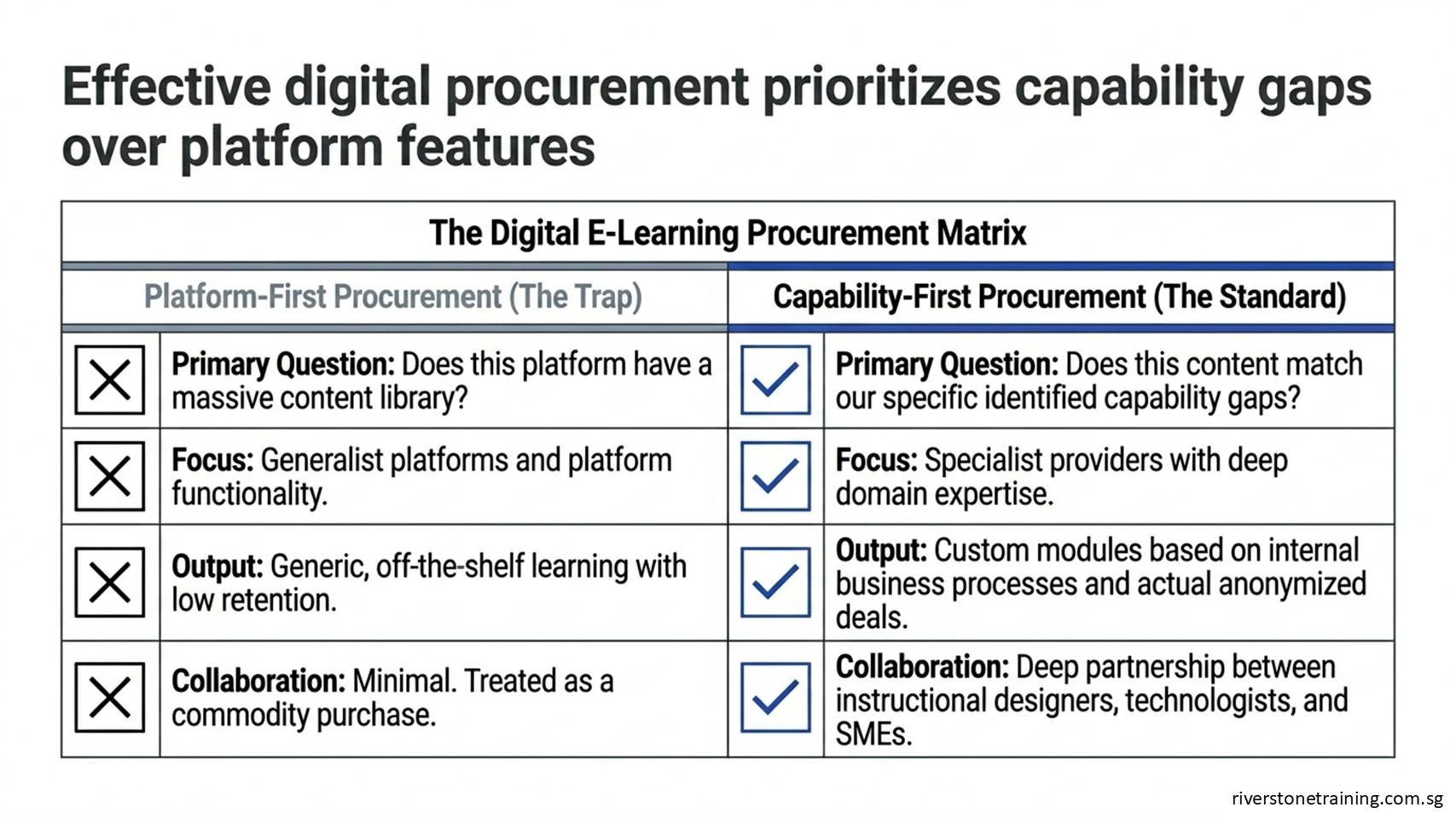
Digital learning has revolutionised the economics and logistics of corporate learning. While learning used to be conducted in a room with employees, negotiating training times, and paying for travel, digital platforms now enable organisations to roll out learning programs on a large scale in ways that were previously unheard of and flexible. An analyst in Singapore can take the same course as another analyst in London, at any time of day that fits his/her schedule, and the HR department will be monitoring their progress in the centre.
However, there are widely varying quality levels in digital learning. Those organisations that get the most from e-learning investments have a goal of ensuring depth of content, interactivity and relevance, and not just platform functionality. The optimal e-learning content development combines the principles of instructional design with domain expertise and ensures that learning is not just a passive process of learning but active learning through exercises, case studies, assessments, etc.
Organisations are also turning to custom digital learning content that aligns with their own business processes, vernacular, and strategy, and are increasingly doing so. For instance, a multinational bank may hire a set of modules that are based on their own credit analysis structure, and are based on anonymised versions of deals that they have actually executed. This degree of specificity results in learning outcomes which can’t be matched with generic off-the-shelf learning.
While questions like “Does this platform have a big library?” are important for HR and L&D leaders considering investments in digital learning, another question is more telling: “Does this content match the real capability gaps we have identified in our team?” The response to the second question should be used to inform the procurement as it will often inform towards specialist providers that have deep knowledge of their particular domain, as opposed to generalist platforms.
What Role Does Financial Modelling Proficiency Play in Organisational Performance?
Financial modelling has emerged as one of the most significant tech skills of today’s business. In addition to investment banking and private equity, financial models are now helping to guide decisions across all functional areas, such as revenue planning by FP&A teams, capital expenditure by business operations teams, and stress-testing acquisition scenarios by strategy teams. If the people behind these models are not well-trained, then the downstream effects can be massive, ranging from bad investment decision-making, suboptimal budgets and misaligned incentives.
As an example, companies that conduct systematic financial modelling training report that there is a measurable impact on internal analysis, in terms of quality and quickness. When analysts understand the key financial modelling techniques explained through rigorous coursework, they build models that are cleaner, more auditable, and less prone to error. It’s more than an efficiency improvement – it’s a risk management result.
Often, the challenge for organisations developing these capabilities from the ground up is to determine what skills each staff member requires at what level. Casey is not the only one who needs to know how to create a leveraged buyout model from scratch. The majority, however, do gain from gaining an understanding of the logic of financial model architecture, the importance of assumptions management and how to interrogate the outputs that the model can produce. A curriculum grounded in real-world financial modelling examples provides this context in a way that abstract theory does not.
How Should Organisations Approach Private Equity and Investment Knowledge for Non-Finance Teams?
Among the most interesting changes in the corporate learning arena in recent years has been the need to master investment information by people who are not directly involved in the investment business. With the growing importance of private capital in the economy, and private equity firms holding large stakes in companies in all sectors, it is becoming more apparent that the operational leadership, HR and even marketing teams need to understand their investors’ thinking.
Understanding how private equity investment works helps operational leaders make better decisions about resource allocation, understand why certain metrics are prioritised, and communicate more effectively with board members who come from an investment background. It also assists in making employees feel the reason behind the decisions that may seem nonsensical to them.
A more in-depth understanding of the asset class is vital for finance professionals who interact with PE-backed businesses, whether they are providing advice, arranging financing or acting as a counterpart in a PE-backed M&A transaction. Learning resources that cover private equity basics for beginners through to deal mechanics and fund structures can significantly accelerate this development. For those preparing for roles within the industry, dedicated preparation covering PE interview questions and answers provides an additional edge.
A shared language developed by organisations through investment literacy is aimed at improving decision-making processes across all levels of the organisation, not only in the finance department. It’s one of the characteristics of organisations that really have strong learning cultures, and a very broad financial literacy.
What Are the Best Ways to Deliver Specialised Finance Training at Scale?
There are format, cadence and structure considerations that must be thought through when delivering finance training that is specialised. The best programs are those that have a blend of online and in-person sessions, and include peer cohort sessions and a chance to practice what was learned immediately in actual work situations.
A combination method is likely to yield better results for companies with big finance departments. Employees complete self-paced modules covering technical foundations — working through a step-by-step project finance model tutorial or building through a structured curriculum of valuation techniques — and then come together in live sessions to apply those concepts to current business challenges. This approach of individual learning and collective application enhances learning and the transferability of skills.
For smaller teams or organisations with highly specific needs, partnering with an in-house training provider that can design and deliver bespoke content is often the most efficient route. Along with their teaching skills, these suppliers also have the capacity to tailor material to a particular sector, regulation or culture. The investment in customised workplace training programs typically pays back quickly through faster skill development and higher engagement compared to generic alternatives.
The motivation and validation of outcomes also play an important role in certification. Employees who complete a corporate finance course with certification gain a tangible credential that reflects their effort and validates their capability to both their current employer and the broader market. Recognition has an impact on retention and engagement for organisations because they are investing in their employees’ development, thus demonstrating their commitment.
How Can Leaders Measure the Return on Investment of Learning Programs?
A big challenge in the world of corporate learning is ROI – the business case is simply never made to finance committees and to the senior management team. The benefits of training are not immediate and tangible, and often cannot be traced back to a specific outcome. However, those businesses that do not measure risk a low investment (or an incorrect investment) in learning.
The best models for measuring ROI of learning are those that incorporate leading and lagging measures. Leading indicators, like assessment completion, pre- and post-test scores, as well as self-reported confidence levels, give early signs of the learning taking place. Lagging indicators like model error rates, deal turnaround times, and employee retention rates reflect actual changes over time and their impact on the business.
For finance-specific training, measuring real-world outcomes like the percentage of staff that pass professional certification exams, or the amount of time it takes them to create an analysis that is submitted for review. For programs such as a finance certification course online, the measurement can be easy, thanks to the framework that is built into the program.
Business valuation course investments are also analysed from a strategic capability perspective by organisations that are serious about a return on investment. While a change that can’t be easily summed up might not be as obvious as others, it’s not an insignificant one, especially for a team that had not consistently been able to create its own DCF before now. Understanding how to value a business independently removes the organisation’s dependence on expensive external advisors for standard transactions, generating measurable cost savings that can be tracked over time.
How Can HR and L&D Teams Build Sustainable Learning Infrastructure?
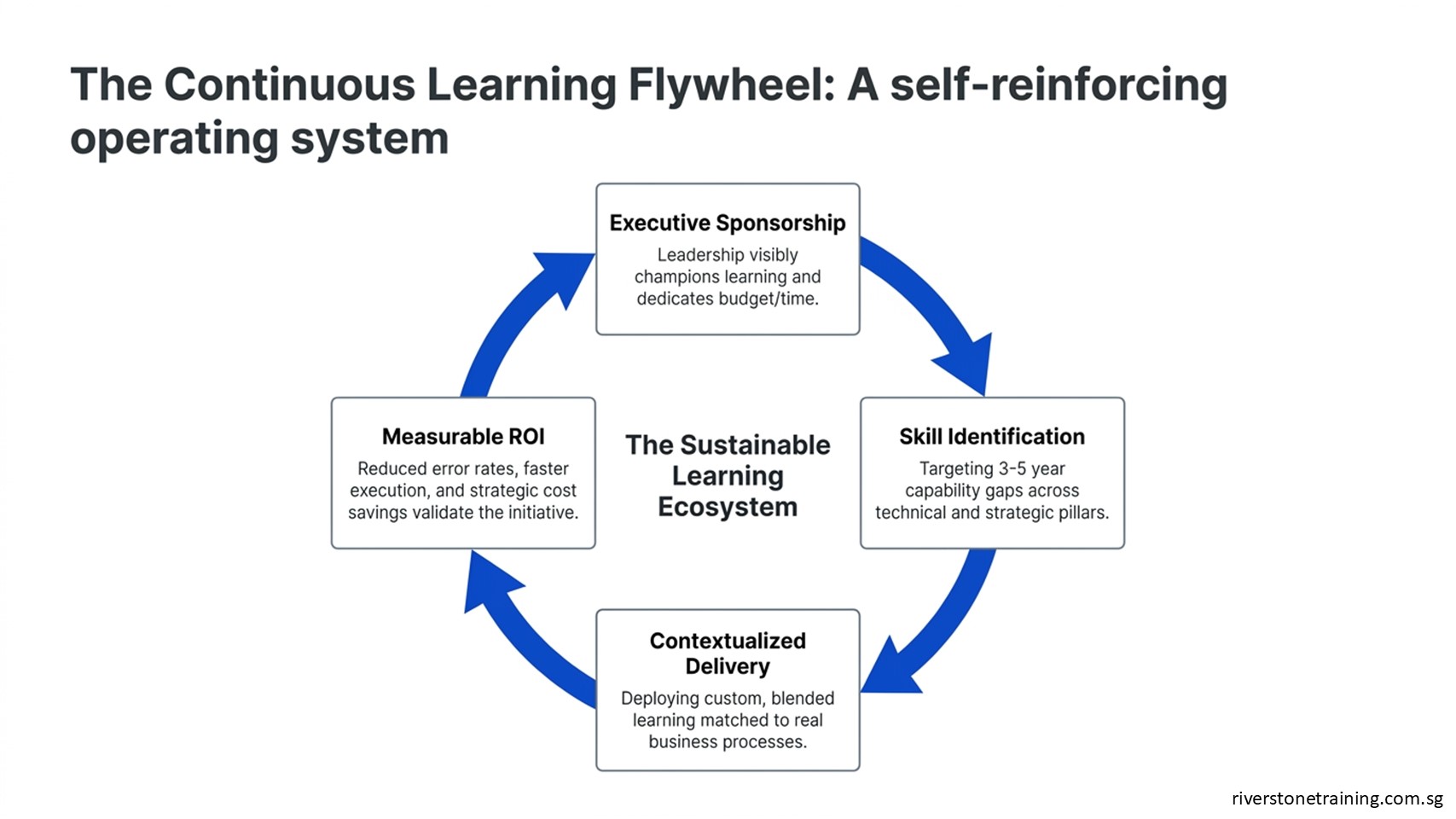
The process of building a learning culture doesn’t have a definite conclusion. It needs a framework of systems, processes and relationships that are able to facilitate learning over time, not merely as a series of ‘one-off’ interventions.
Those HR and L&D teams that manage to create such an infrastructure are likely to do several things right. They create a well-defined taxonomy of learning, the taxonomy is aligned with career paths and skills, and employees understand the “why” behind the career path, as well as what they can learn. They develop individual and departmental yearly learning plans, and have a budget and time dedicated to this. They build relationships with specialist providers — whether for advanced financial modelling course online delivery, project finance training for professionals, or broader business skills — that allow them to quickly deploy quality learning when needs emerge.
They also make investments in the quality of the content that is learned. The best e-learning content creation is not a commodity — it is a craft that requires deep collaboration between subject matter experts, instructional designers, and technologists. It’s not that different from what organisations that truly consider content a key differentiator experience – a lot more engagement and completion.
Last but not least, it’s important for a sustainable learning infrastructure to be visibly sponsored by the Executive. Everything that the CFO (or any CEO) does in the open when they complete a module on emerging market credit structures or when they talk about a book that has been professionally useful, is a strong indicator that learning is valued at the highest levels of the organization. Culture trickles down, and learning culture is not an exception.
Conclusion: Is Building a Learning Culture a Competitive Advantage?
The statistics are clear: systematic investment in ongoing learning leads to an organisation’s performance and success in key areas such as talent retention, strategic agility and financial outcomes. In fields as challenging as finance, valuation and structured investment, it is a matter of the quality of decision-making, risk missed, and opportunity seized.
Creating this culture cannot be done with any learning management system. It means having a clear strategy on what skills are important, truly investing in good material and expert presentation, and the discipline needed to set aside time for learning, despite the urgency of work. If a company is willing to do that, the results include superior talent, higher employee engagement, and being more competitive than the competition, among the most enduring of any that can be achieved.
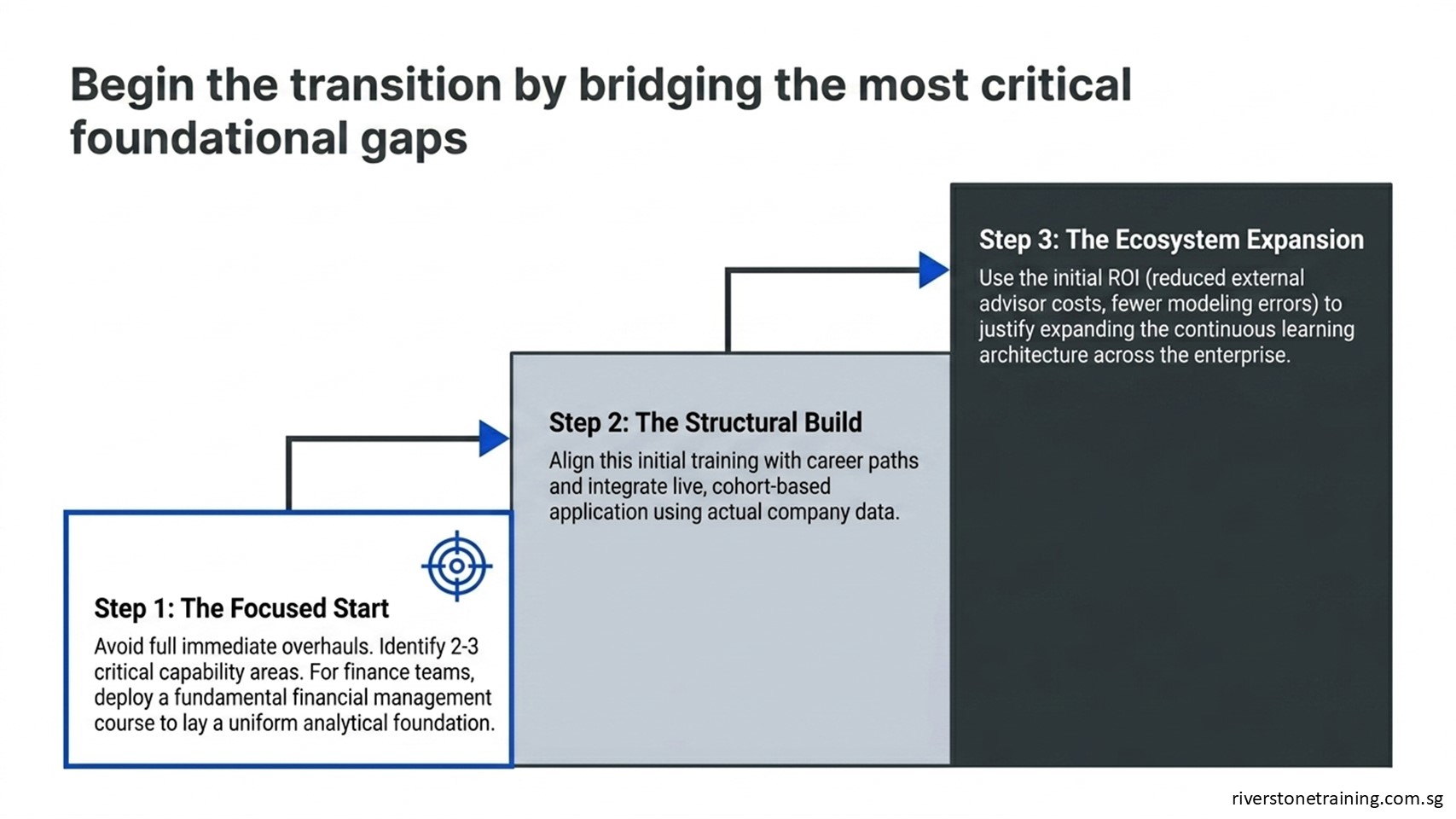
Most organisations begin their process of changing their learning architecture rather than starting with a full overhaul. It is the area of two or three capability areas that are just as far apart as possible, and a concentrated effort is made to bridge this gap. That journey starts with a financial management course for professionals for many finance teams, which will lay the analytical foundation on which all other things are built. From there, it becomes easier to see with each step how the journey to a truly learning organisation will go.