
Business Growth Drivers
How Finance Training and Corporate Upskilling Are Shaping the Future of Business
The future of business is changing, and finance training is playing a pivotal role in this transformation. The world of business is evolving, and finance training is at the forefront of this change.
The business world is extremely competitive these days, and organizational performance goes beyond just market share, capital reserves, or product innovation. The best way to tell high-performing companies from the rest is the depth and quality of the knowledge their people have — especially with regard to finance, analytics and strategic decisions. Paying attention to building skills in their teams’ financial literacy is not only about creating internal resources, but also about creating a lasting competitive edge.
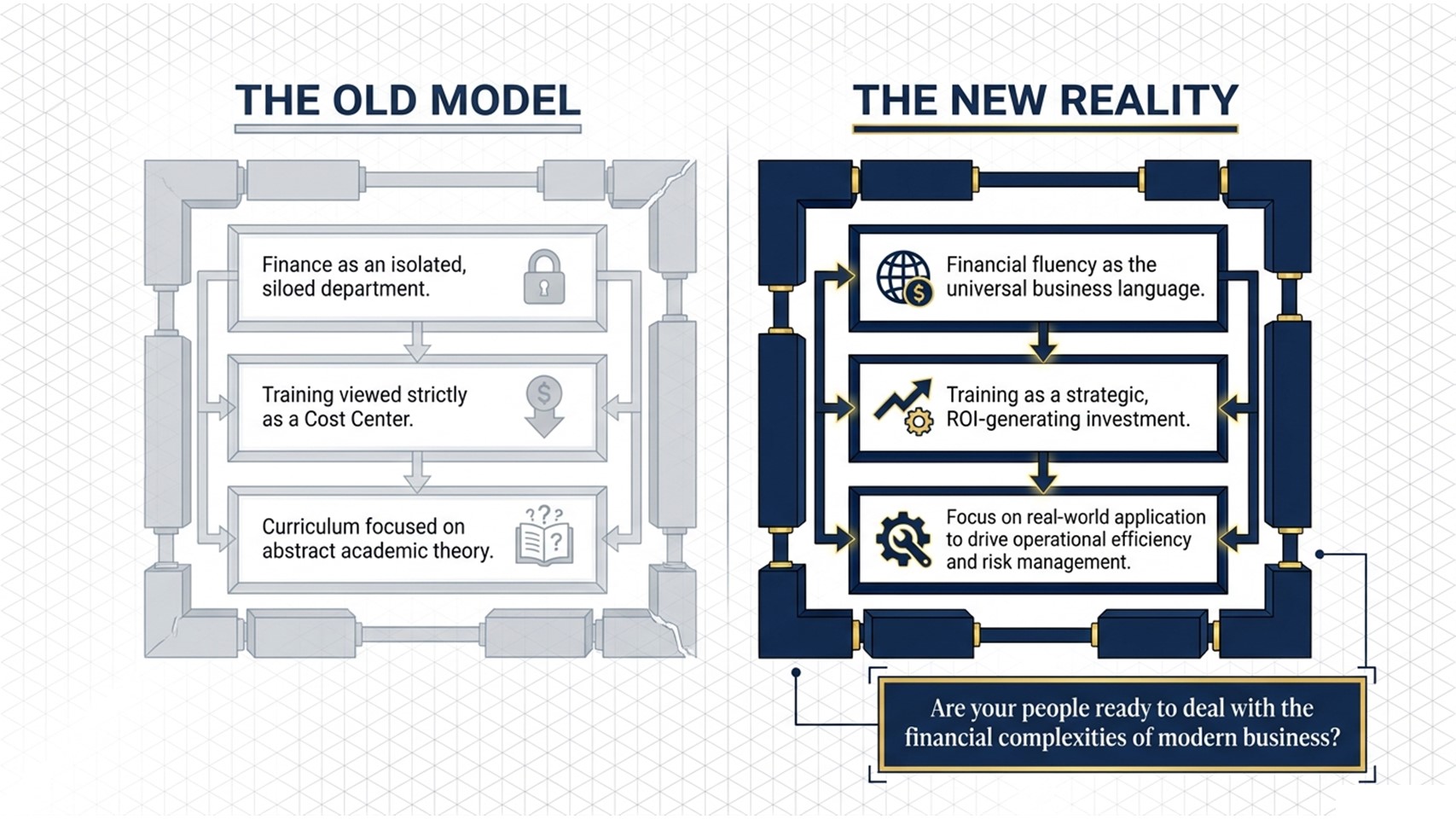
This change is changing the approach to learning and development in organizations. Training and Education, once considered a cost center, are now recognized as an investment that directly impacts revenue growth, operational efficiency, and risk management. Whether it’s at a boardroom in Singapore or in any business office in Southeast Asia, a scenario is unfolding in which business leaders are asking themselves one simple question: Are our people ready to deal with the financial complexities of business?
For many organizations, the solution is to seriously re-evaluate their approach to employee development, the most important skills they want to teach, and how they can scale learning.
The Business Case for Finance Education
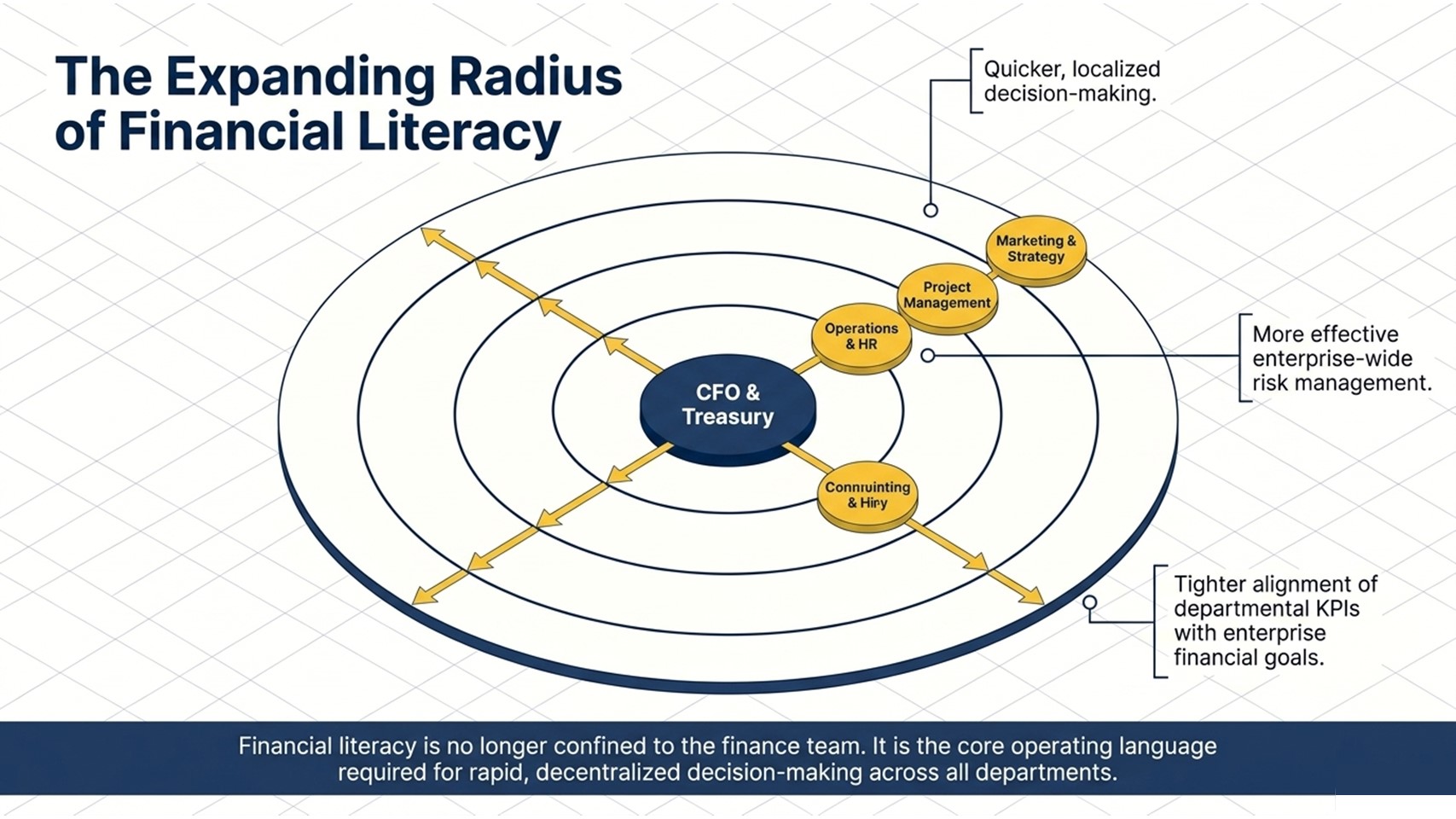
Financial literacy is in more demand throughout an organization than ever before. What used to be enough for the CFO and treasury team to comprehend is no longer the case. Today, more project managers, more operations leaders, more HR directors, and even marketing personnel require an active understanding of financial concepts to get their jobs done.
This reality is driving organizations toward structured finance workshop training programs that go beyond theoretical instruction. The best programs are based on real-world applications, such as training workers on how to read financial statements, evaluate project feasibility, and add value to budget discussions. The more prevalent the understanding of finance, the better the decision-making within an organization. Teams cease to operate in isolation and begin to communicate using a “business language”.
Numerous studies have found that companies that have financially literate employees make quicker decisions, manage risk more effectively and connect departmental goals more closely with enterprise-wide financial goals. This directly equates to improved outcomes in settings with limited resources and where capital allocation decisions have a major impact.
Financial Modeling as a Core Organizational Capability
The financial model, which comprises a structured framework of data-driven models, is one of the most sought-after skills in corporate finance today, serving as a crucial tool for forecasting, valuing, and strategic planning. Financial modeling, which was once a skill confined to analysts and investment bankers, is now a fundamental skill demanded in a much wider range of jobs.
Experts with solid financial modeling basics enjoy a more favorable position in making capital expenditure choices, evaluating the financial effects of operational adjustments, and providing sound business cases to senior management. Whether you’re developing a five-year revenue curve for a new product line or stress testing a cost reduction program, financial models are a key analytical tool that supports sound decision-making.
But, as well, there is the technical skill that is needed to make these models good. While many people have advanced knowledge of the Excel tools available, Excel finance training is the benchmark for most corporate modeling, and those who can use such sophisticated tools as dynamic arrays, sensitivity tables and scenario analysis have an actual advantage at work. The competency in providing a structured financial analysis course of study to solve real-life business problems helps in building the competency that purely academic training cannot.
Organizations that prioritize forecasting skills training for their finance and strategy teams gain a meaningful advantage: they can anticipate business conditions rather than simply react to them. In times of uncertainty or even volatility, modeling various scenarios and gaining an understanding of the financial consequences of each one is not only helpful but necessary.
Project Finance: Structuring Complex Investments for Long-Term Value
As companies grow and expand, they are becoming more likely to be engaged in large-scale, complex capital investments, such as expanding infrastructure, investing in energy, public-private partnerships, and global growth initiatives. The kind of financial expertise needed for these ventures is more than just business finance.
At the core of this field are Project cashflow analysis. The understanding of how cash flows in a project, from the development stage, construction, operations, through to exit, not only requires technical modeling abilities but also requires an understanding of risk allocation, debt structures, and regulatory regimes. Those who don’t know this will find themselves in a disadvantaged position when dealing with lenders, sponsors, or government officials.
In recent years, there has been a dramatic increase in investment in energy finance training , particularly in the wake of the increasing amount of renewable energy and infrastructure projects in Asia and beyond. A project structuring training can play a significant role in the risk-return profile of any project deal from the beginning, and organizations in the power, utilities and natural resources industries are increasingly looking for staff members who grasp the process of project structuring training and the impact this has on the project’s risk-return profile.
A development finance course not only benefits the finance team, but it also benefits other functional areas involved in bringing complex investments to financial close, such as project management, legal, and engineering. These teams must share a common understanding of project finance principles to improve the quality of cross-functional collaboration and avoid costly misalignments.
Increasingly, building internal expertise by undertaking a project investment course is viewed as a precondition for the responsible stewardship of shareholder capital, for organizations thinking about deploying large volumes of capital.
Private Equity and Investment Knowledge: Building Fluency in Capital Markets
In addition to corporate finance, recent years have seen an increasing awareness among business leaders of the value of the ability to be fluent in the markets for private equity and investment. Knowing how institutional capital works, how deals are arranged, and what factors affect investor returns in these arrangements will better equip corporate professionals to interact with outside constituencies – be it in preparation for a capital raise, handling an acquisition, or considering a joint venture.
Those who have become knowledgeable about private equity basics understand the motivations and priorities of the financial sponsors, which leads to better negotiation and dynamics in the deal. Likewise, deal structuring training equips the concepts needed to assess the risk and return of various financing structures such as equity, mezzanine, and senior debt.
Investment fund training is becoming more popular as well in corporate development teams, where VC, infrastructure funds and sovereign wealth investors are regular clients. Once they understand the structure of these vehicles, how they are evaluating opportunities and what their return expectations are, corporate professionals have a more complex system to work with when dealing with investor relationships.
Content for the acquisition finance course provides the tools for the teams involved in an acquisition to understand and consider the financing alternatives, model a leveraged buyout situation and understand the true cost of capital. For professionals who want to gain greater awareness of the dynamics in the equity market, an equity market course offers market literacy to help put a company’s performance in context.
Business Valuation: Understanding What Companies Are Worth
No skill is more directly related to strategic results than business valuation. The problem with determining the value of a business — and why — is a skill that can’t be replaced, whether an organization is thinking about buying one up, getting ready to sell a portion of it, funding equity capital, or just trying to figure out how the market is valuing the enterprise.
Corporate valuation basics are increasingly expected of senior professionals across finance, strategy, and corporate development functions. These practitioners who are familiar with discounted cash flow analysis, comparable company multiples, and transaction precedents are in a better position to both question assumptions and negotiate and make recommendations that are defensible.
Valuation methods training includes many methods, including asset-oriented valuations for capital-intensive businesses as well as earnings-oriented valuations for service businesses and tech companies. In each situation, knowing which of the methods is best suited and then being able to apply it rigorously is the difference between competent analysts and effective analysts.
Structured enterprise valuation course will give the professional an excellent foundation, enabling him or her to participate on an equal footing with bankers, advisers and institutional investors in the M&A and fundraising process as well as in strategic planning. A comprehensive business appraisal course covers more, including the regulatory, accounting and industry-specific considerations that impact the valuation of a business in various jurisdictions and industries. In conclusion, company worth analysis is not exclusively a technical operation; it is the prism through which all key strategic decisions should be seen.
In-House Training: Delivering Learning Where It Matters Most
Many organizations find that the most effective approach to developing financial and operational capacity is to create customized, organization-specific programs to meet their particular business needs, industry context and organizational culture. While generic off-the-shelf training is useful, it is not likely to solve the specific issues of one team or one business unit.
In-house training programs enable the organization to design the training program from scratch, choosing the content, case studies and trainers that best suit the organization’s strategic needs. The learning goal of a bank’s treasury function is different from that of the project finance team at an energy company and bespoke training recognizes that fact, not wishing to make a one-size-fits-all solution.
The power of shared context is also a boon to in-house Corporate training courses. Learning takes place better and faster, and is more lasting, when the whole team learns together and applies models from their own industry, or even from their own organization. Discussion is more meaningful, questions are more relevant, and training has something to the present, and it has a practical application that leads to a change in behavior.
Employee training workshops are particularly effective for building skills that require collaborative practice — financial modeling workshops, case-based valuation exercises, and deal structuring simulations all benefit from the energy of group learning. Workplace learning courses can be designed to fit around operational needs to minimize disruption and maximize engagement. Good staff development training highlights the organization’s commitment to its employees’ development, resulting in benefits of employee retention, motivation, and performance.
Digital Learning: Scaling Knowledge Across Organizations
Digital learning has revolutionized the way organizations are able to provide training in large numbers. Face-to-face training can still be effective — especially for more complex, application-based content — but having the capability to roll out quality learning to workers in different locations and time zones provides new opportunities in workforce development.
Today’s e-learning course design is more than just slideshows. Best-in-class digital learning experiences integrate video-based learning, interactive learning activities, scenario-based evaluations, and feedback into meaningful learning pathways that help the learner truly become capable. With good design, online training development can be as effective, if not more so, as face-to-face training for lessons and activities that are conceptual, and can vastly improve the accessibility, uniformity and cost per learner.
Digital learning systems also give an organization insight into how a learner is progressing in the learning process, gauge knowledge retention and uncover gaps in the process more easily than classroom training. Learning management systems give L&D teams and business leaders a data-driven view of the learning impact of their training investments and help them make informed decisions on where to invest in the future to improve learning.
Virtual training programs are particularly suitable for upskilling large groups of employees in a single organization for a uniform message across many markets. In the instance of topics that change often, such as due to regulations, market conditions, or best practices, having the ability to make current and accurate knowledge available to employees at all times translates to being able to update learning content creation assets quickly.
This combination of digital platforms and effective instructional design has enabled the creation of truly world-class learning experiences — at a price that is significantly lower than the cost of traditional training — and is hastening the democratization of professional education.
Applied Finance Learning: Bridging Theory and Practice
The lack of a gap between theory and practice is one of the foremost problems in professional education. While a number of professionals have experienced financial education in academic programs or in previous positions, they are less adept at putting those lessons into practice when facing real business scenarios, and often feel uncomfortable doing so.
This is where the course design of the applied finance course really makes a difference. Case studies, hands-on modeling exercises, and deal analysis of real-life situations require the participants to deal with the ambiguity and complexity of real business decisions. Instead of being taught in theory, the principles are applied — and, of course, used in the application (and development) of a practical judgment that only comes from doing.
Organizations that have Corporate financial learning programs that connect theory with practice also tend to have a higher return on investment. When the results of training are immediately apparent and measurable in the work of everyday employees, such as the quality of financial analyses, business cases, and the confidence with which professionals participate in strategic conversations, the impact is undeniable.
Therefore, a good finance learning program must be measured not only by the satisfaction scores of the participants, but also by the extent to which it has influenced the behavior and results of the participants. The best programs have solid concepts and heavy hands-on practice and are presented by people who have first-hand experience in the issues the participants are addressing.
Organizations that invest in finance knowledge training for their people are making a bet on the long-term quality of their decision-making — and it is a bet that consistently pays off.
Conclusion: Building the Organization of Tomorrow, Today (Business Growth Drivers)
The organizations that will drive their industries over the next 10 years are not waiting and seeing how the business world changes before committing investment in their people. They are already establishing the skills and knowledge in financial, analytical, and strategic areas, which will enable them to make sound decisions and confidently face complexity, opportunities, and risk.
From foundational financial planning course content to advanced project finance, valuation, and private equity training, the landscape of corporate learning has never been richer or more accessible. Organizations that are on the cutting edge of digital delivery, in-house customization and applied learning design are leveraging to develop authentic expertise in a scalable manner.
Investing in employee development is not a question that business leaders have to ask themselves today; it’s how to invest in employee development in a way that has enough focus, rigor, and relevance to have a lasting impact. The ones that do it well will have an invested workforce, a confident workforce and a more capable workforce, all of whom are also more competent.
In the end, organizational performance is dependent on human ability. Great training is the result of human capability, at its best.